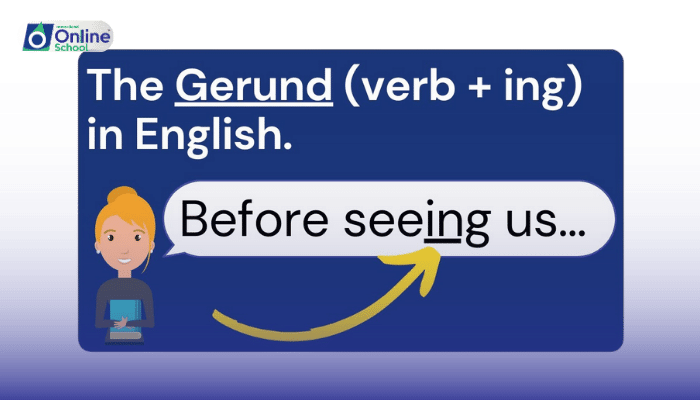
i. Introduction to Gerunds:
Gerund: A gerund is a verb form ending in -ing that functions as a noun in a sentence. Gerunds can represent actions, activities, or states of being.
ii. Formation of Gerunds:
Most gerunds are formed by adding -ing to the base form of the verb:
Example: run (verb) → running (gerund)
Exceptions:
Verbs ending in -e: drop the -e and add -ing (e.g., dance → dancing).
One-syllable verbs with a single vowel followed by a single consonant: double the final consonant before adding -ing (e.g., sit → sitting).
iii. Uses of Gerunds:
As a Subject:
- Example: Swimming is my favorite form of exercise.
As an Object:
- Example: She enjoys reading books.
After Prepositions:
- Example: He is good at playing the guitar.
After Certain Verbs:
- Example: She suggested going to the movies.
In Gerund Phrases:
- Example: Running marathons is his passion.
iv. Gerund Phrases:
A gerund phrase is a gerund accompanied by other words that complete its meaning. It may include objects, modifiers, and complements.
Example: Eating ice cream slowly is a delightful experience.
Gerund: Eating
Gerund Phrase: Eating ice cream slowly
v. Practice:
Identify the gerunds and gerund phrases in the following sentences:
Cooking is a valuable life skill.
She is interested in learning new languages.
Swimming in the ocean is my favorite summer activity.
They discussed solving the problem together.
vi. Special Uses and Considerations:
Gerunds with Possessive Adjectives:
- Example: I appreciate your helping me.
Gerunds in Passive Construction:
- Example: Being invited to the party was unexpected.
Infinitive vs. Gerund:
- Use a gerund when the action is the main focus.
- Example: I enjoy swimming.
- Use an infinitive when expressing purpose or intention.
- Example: I went to the pool to swim.
Gerunds and gerund phrases add versatility to your writing by allowing verbs to function as nouns. Understanding their usage and placement in sentences contributes to effective and varied expression in English.
